What's new · June 2026
June 2026
We've added Acceptance Criteria quality gates, multiple projects per repository, notifications, and on-prem and air-gapped deployment.
We've added Acceptance Criteria quality gates, multiple projects per repository, notifications, and on-prem and air-gapped deployment.
Acceptance Criteria
Acceptance Criteria bring measurable, automated quality gates to your modernization projects. Define custom checks like performance thresholds, code coverage targets, or benchmark results that are automatically enforced before code is merged.
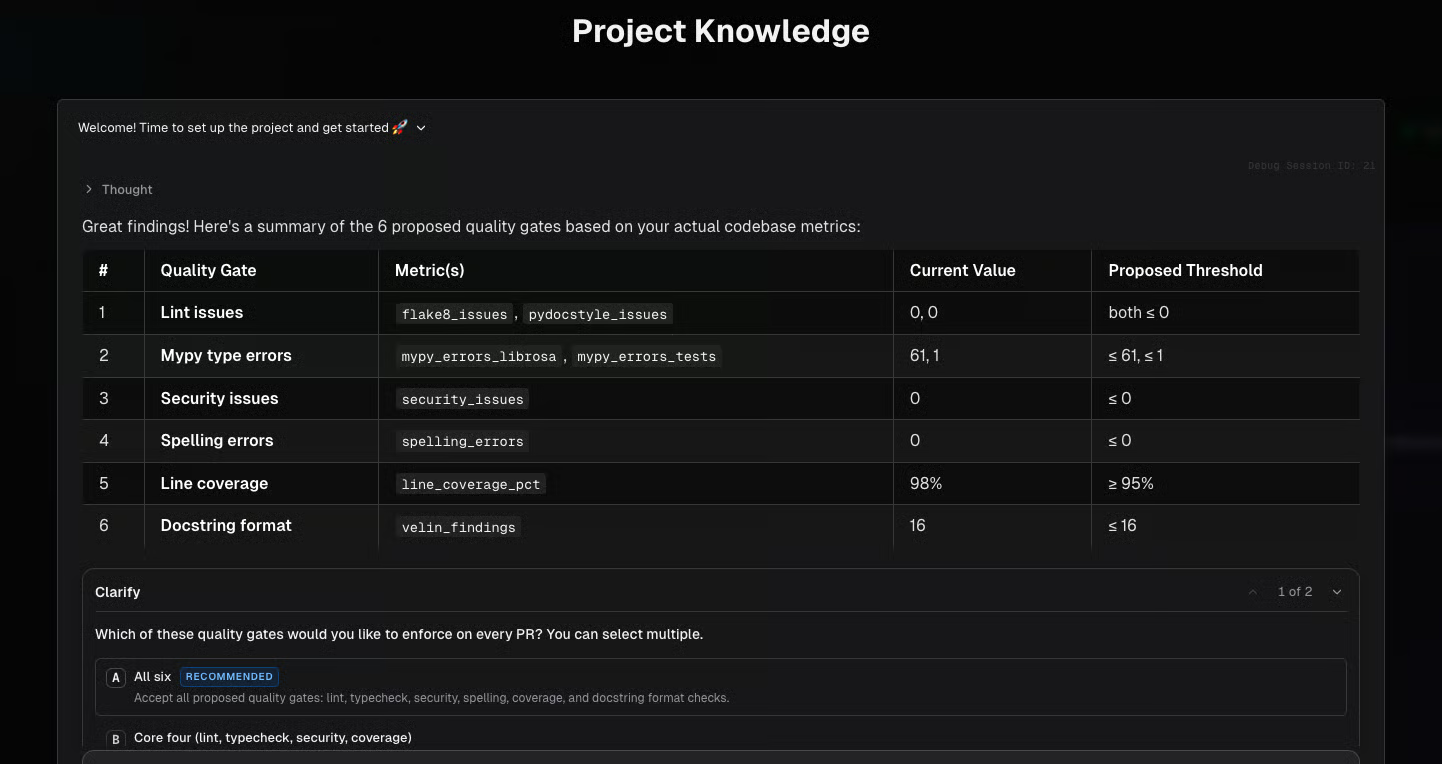
Each check is linked to your project's lifecycle scripts and captures a baseline from the original codebase. Every milestone review validates that the modernized code meets the same, or better, quality bar. If a check does not pass, the pull request is flagged before merge.
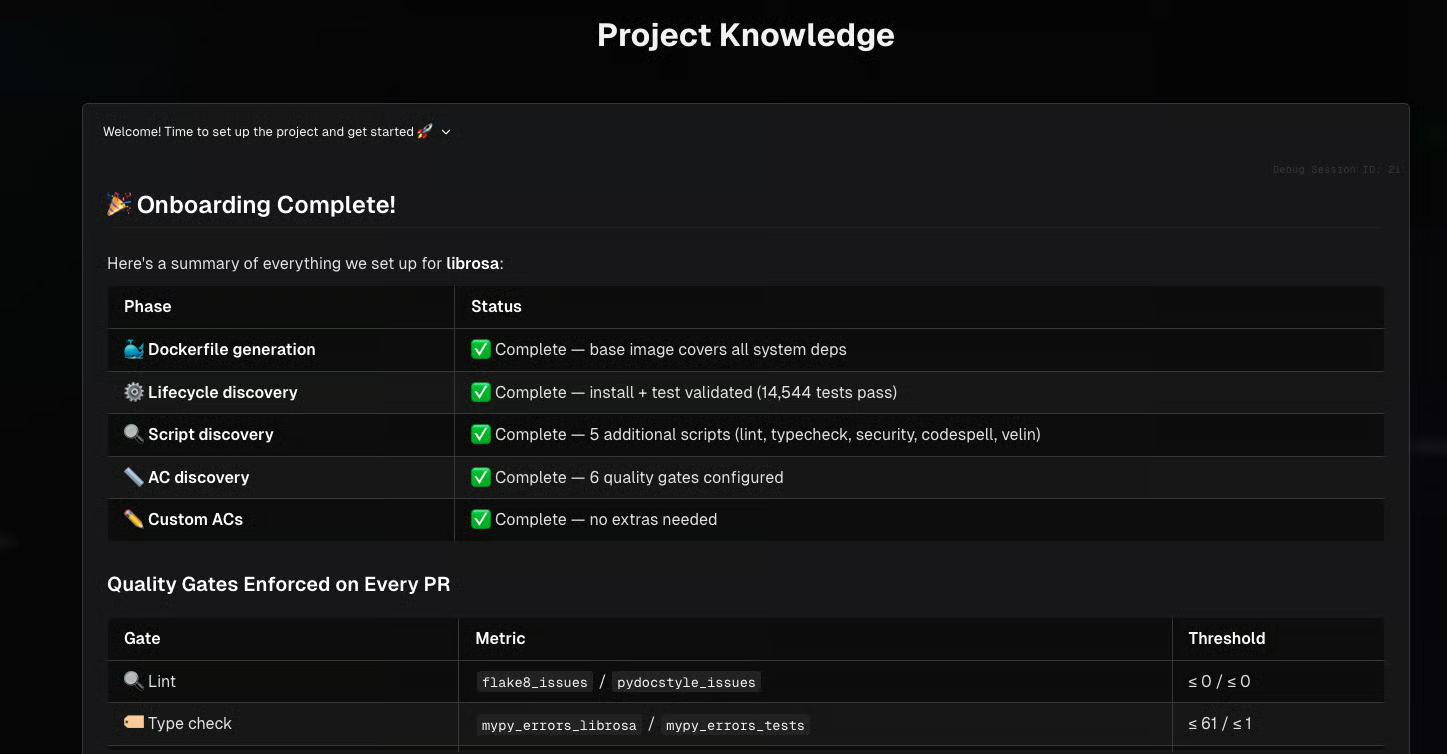
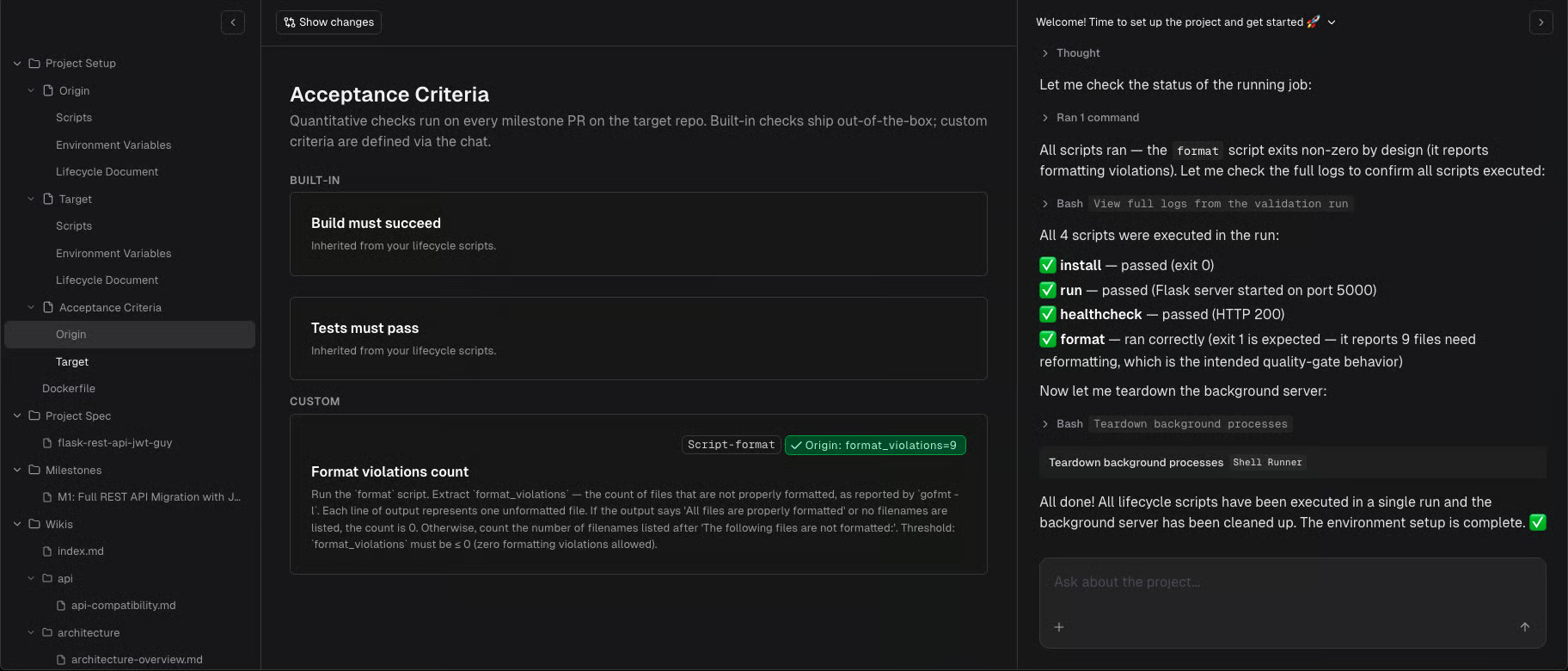
Morph can automatically discover relevant lifecycle scripts and suggest Acceptance Criteria based on your codebase's structure and testing patterns. You can also create and manage them manually through chat.
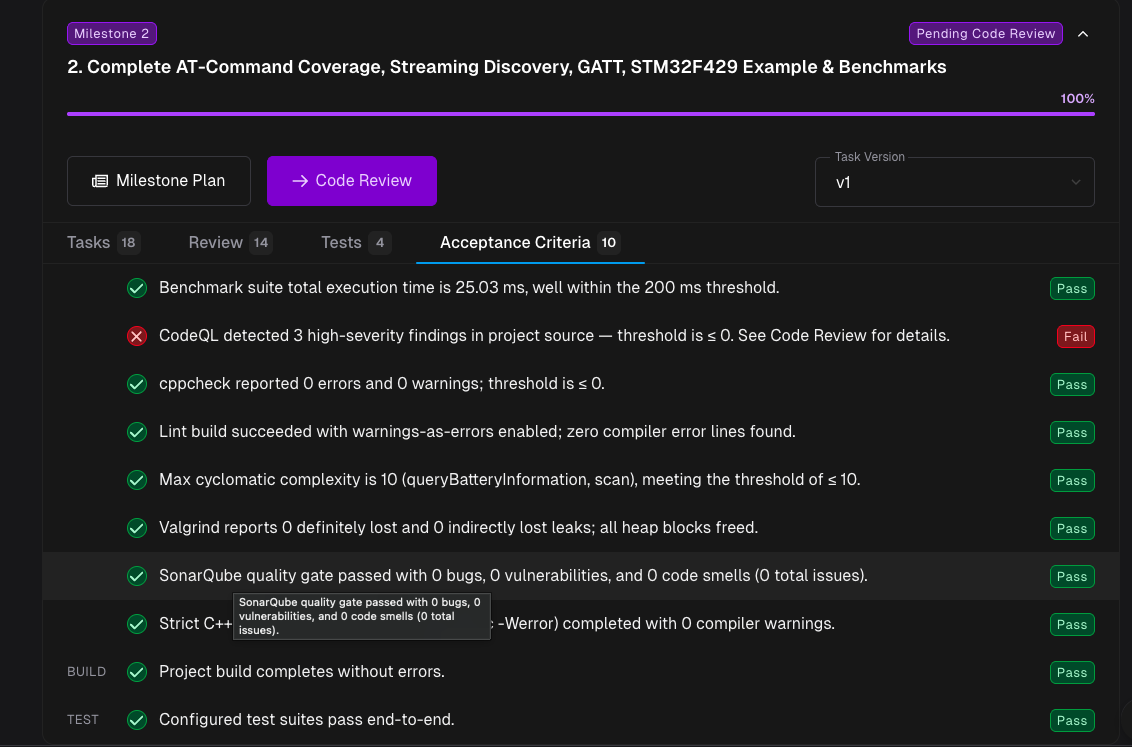
Acceptance Criteria are also visible during milestone review, so teams can see exactly which checks passed, which failed, and what needs attention before merge.
Multiple projects per repository
You can now create multiple Morph projects from the same source repository, for separate modernization tracks, a maintenance project alongside an active migration, or different scopes on the same codebase.
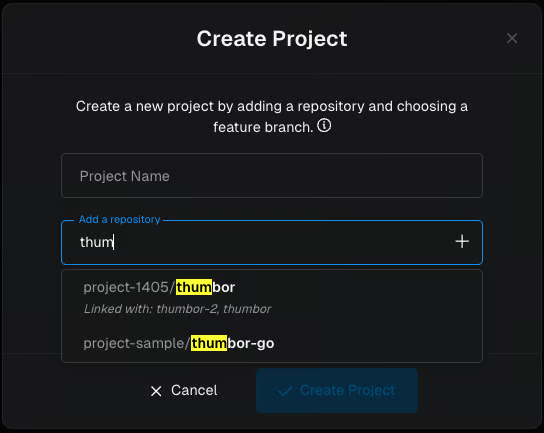
Each project still runs on its own feature branches and milestones, so work stays isolated even when the underlying repository is shared.
The repo picker shows which other projects already use a repository, and removing one project will not disrupt another that shares the same source.
Functional testing improvements
Morph's functional testing workflows are now smarter across backend tests, frontend E2E tests, and projects where the application is already running.
- Smarter backend functional tests: features are classified per endpoint rather than per repository, and reproducible test environments are set up by seeding databases and running lifecycle scripts.
- Frontend E2E test generation: existing Playwright suites and authentication setup are detected and reused, APIs are mocked by default for stability, and results are captured even when tests fail.
- Connect to a running application: Morph can connect to an already-running app instead of managing its lifecycle, verifying connectivity without restarting it.
Notifications
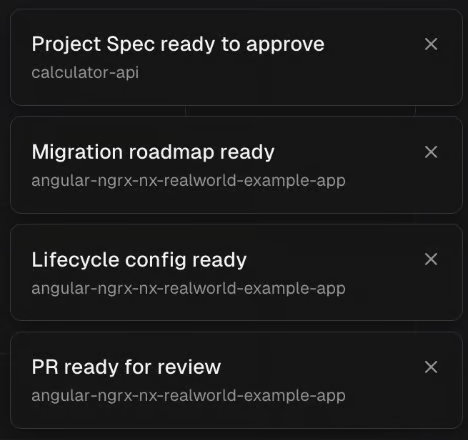
Morph now tells you when something is ready to review or input is needed. Each notification arrives by email, and if Morph is open in your browser, an in-app banner takes you directly to the right project, milestone, or pull request.
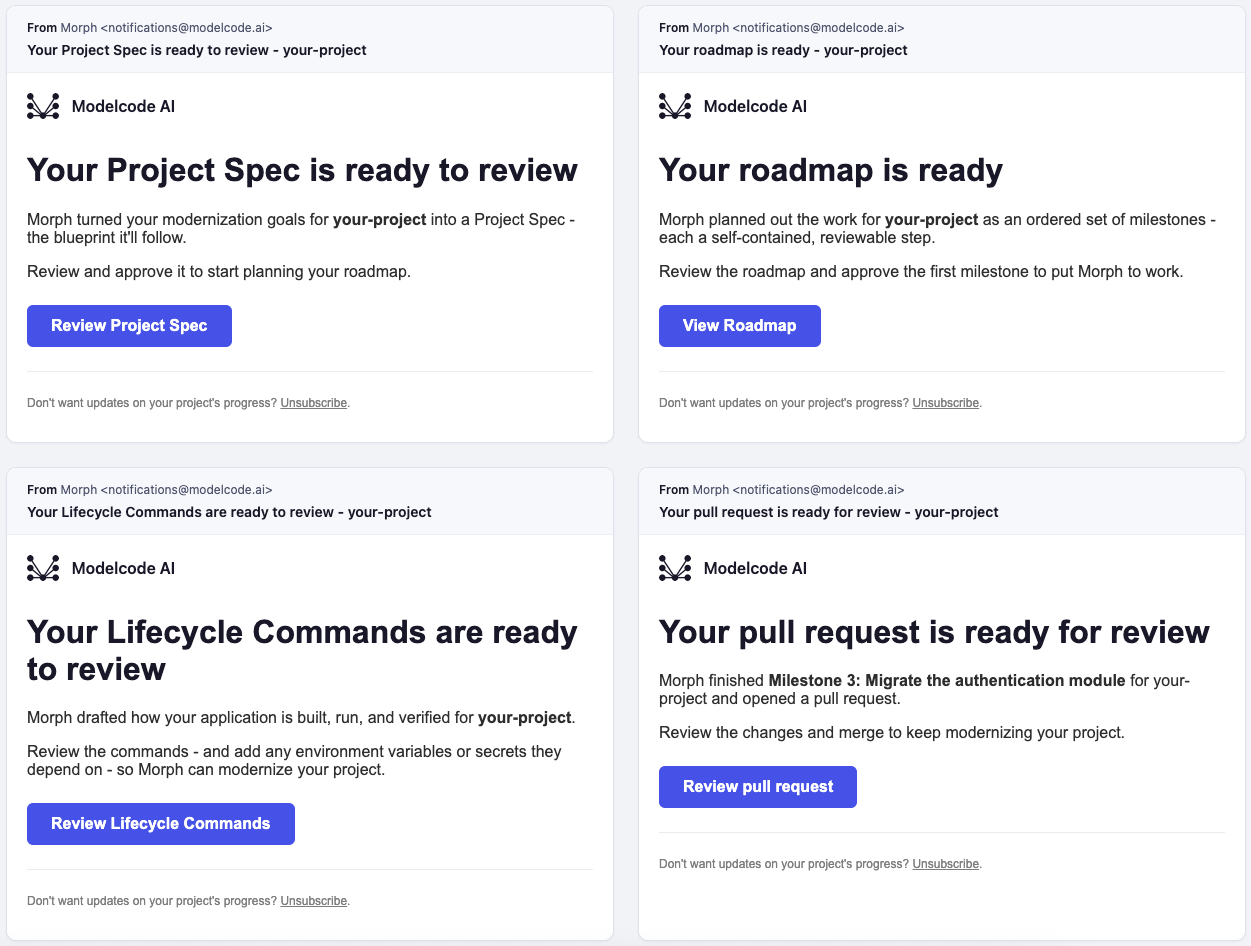
- Your Project Spec is ready.
- Your Roadmap is generated.
- Your Lifecycle config is drafted.
- A milestone pull request is pending review.
- Morph is waiting for input.
On-prem and air-gapped Morph platform support
Modelcode now supports on-premise and air-gapped deployment of the Morph platform in Amazon Web Services, AWS GovCloud (US), and Google Cloud Platform, using Terraform scripts and deployment documentation.
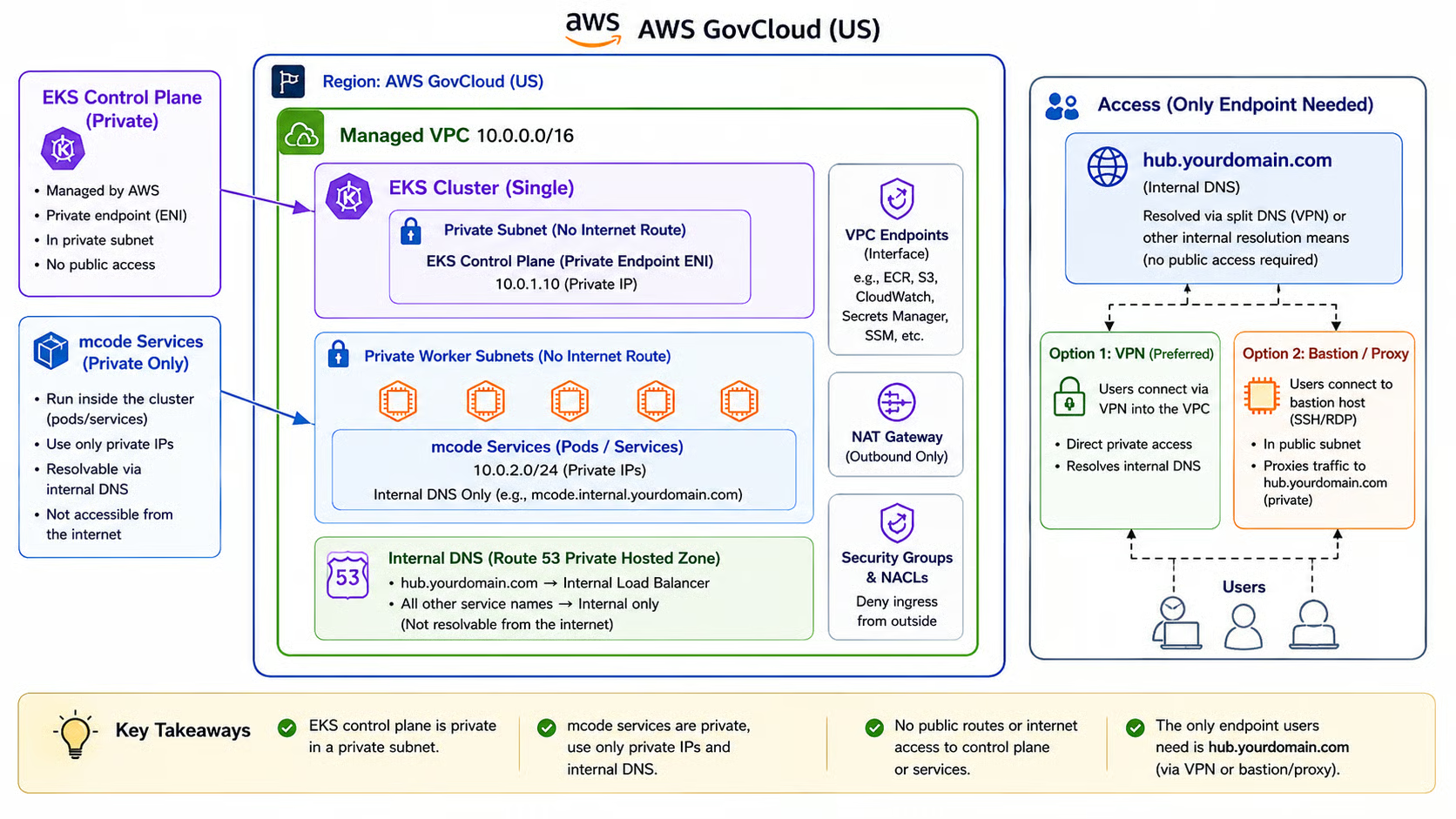
By removing dependencies on external cloud-hosted services like GitHub, Morph can support modernization workflows that run securely within isolated infrastructure.
The platform uses Kubernetes for orchestration and Gitea as a self-hosted Git provider, supporting pull requests, comments, and milestone agent executions entirely within the customer's network. It also handles tenant seeding, admin provisioning, and Docker image bundling for restricted environments.
Gitea as an external provider
Gitea is now a core Git provider, adding support for customers who cannot use cloud-hosted platforms like GitHub because of network restrictions, compliance requirements, or air-gapped environments.
Morph provides its own Gitea instance as the code-hosting layer, giving teams a fully functional Git workflow without requiring external connectivity.