What's new · May 2026
May 2026
Multi-repo support is now generally available. We've also introduced ModelDaemon for running Morph in your own infrastructure, and added Azure DevOps support.
Multi-repo support is now generally available. We've also introduced ModelDaemon for running Morph in your own infrastructure, and added Azure DevOps support.
Multi-repo support is generally available
The Morph Platform now supports many-to-many modernization projects across multiple source repositories and multiple target repositories.
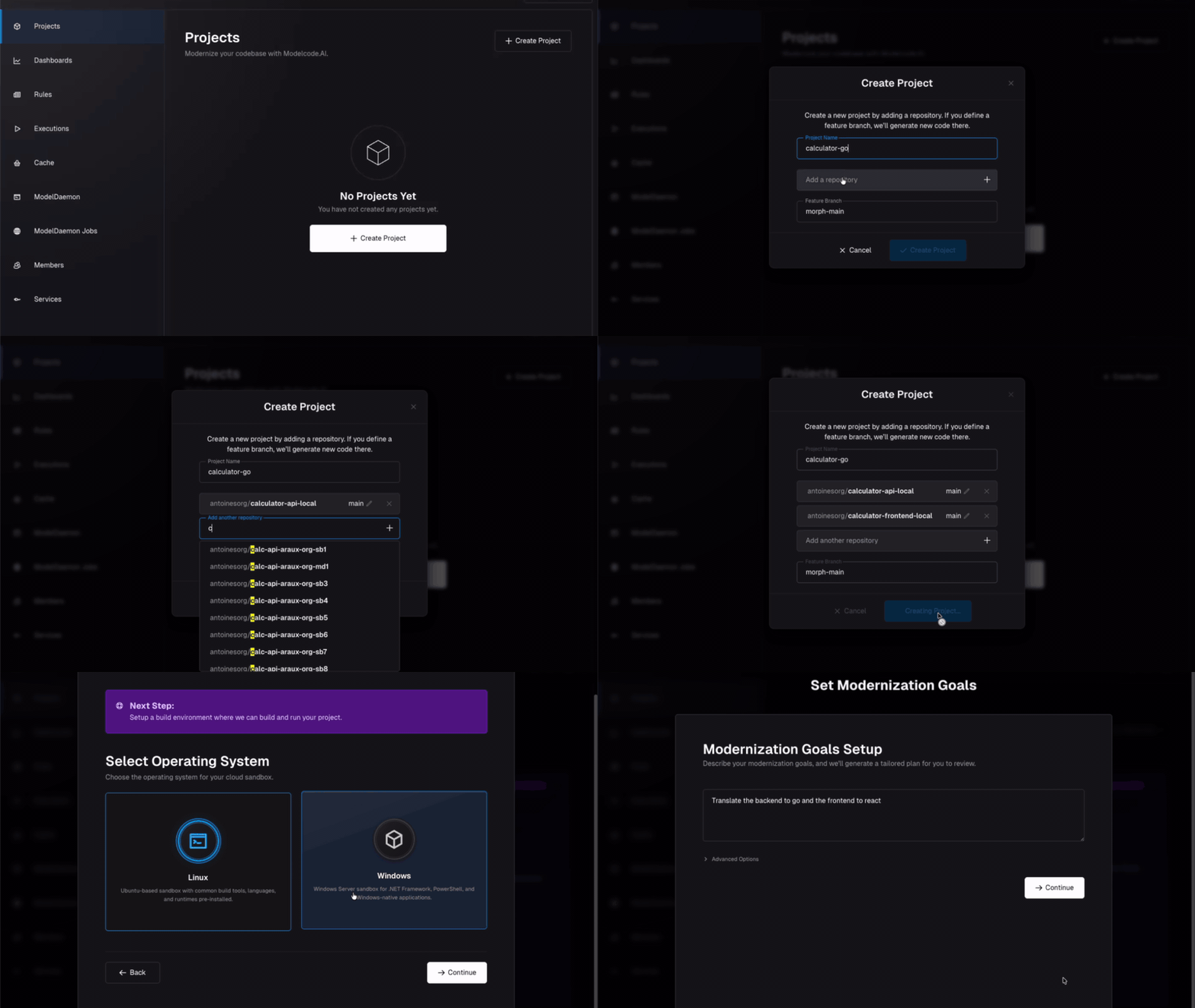
Why it matters: most enterprise systems do not live in one clean repository. Multi-repo support lets Morph work across the actual shape of customer software instead of forcing teams to simplify their architecture first.
- Many source repos can map to many target repos.
- Modernization projects can include multiple related codebases.
- Backend modernization workflows better reflect real enterprise application structures.
ModelDaemon
ModelDaemon introduces a more secure and scalable execution model. It runs inside the customer's infrastructure using outbound-only connectivity, while the Morph Platform continues to orchestrate the work.
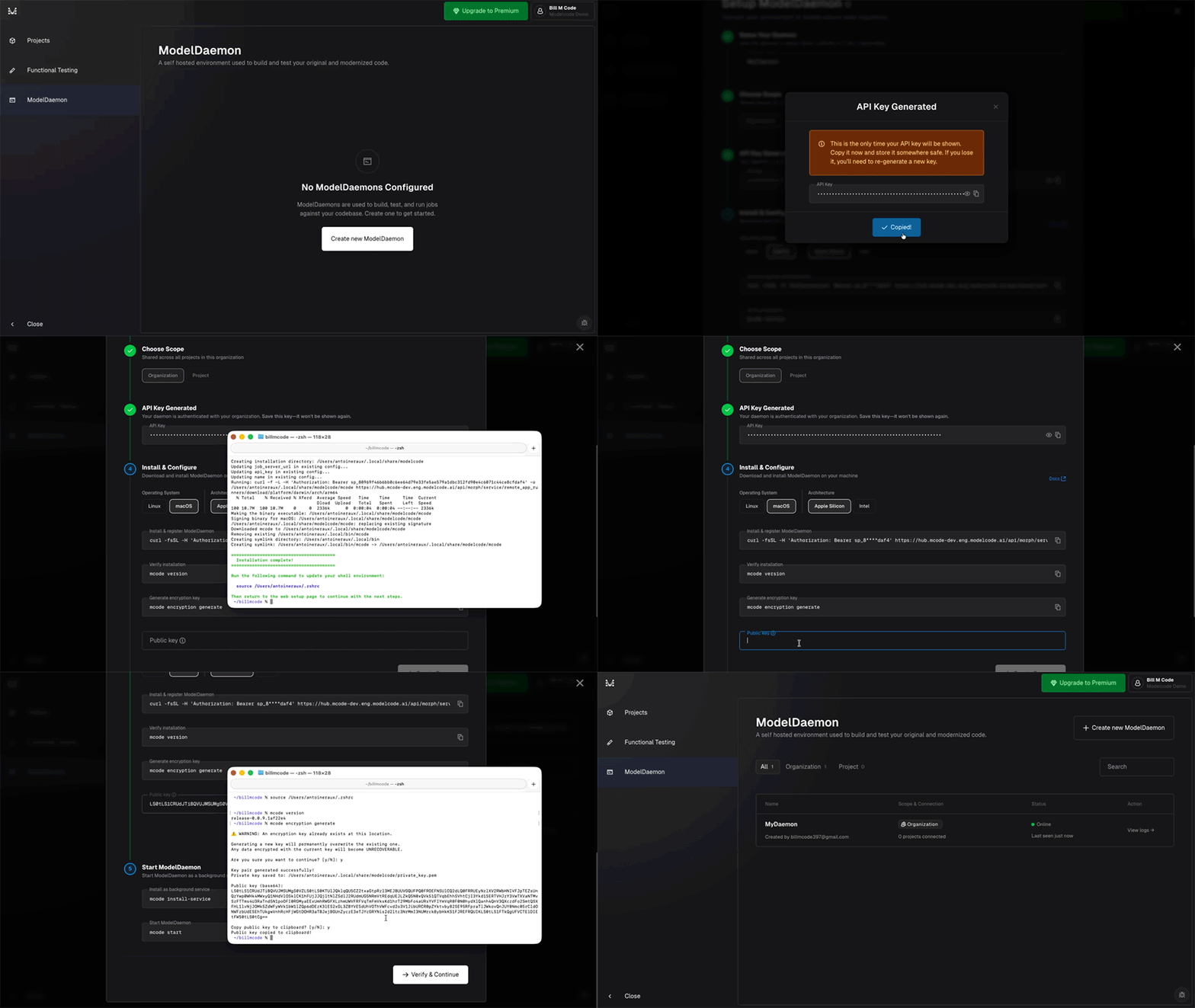
Why it matters: customers do not need to expose inbound access or move private code and dependencies outside their environment, making Morph practical for enterprise and regulated deployments.
- ModelDaemon runs inside the customer environment.
- Connectivity is outbound-only.
- Work executes closer to private code, private dependencies, and internal infrastructure.
- The daemon supports smarter execution through the morph-agent at the edge.
Smarter local execution with morph-agent
With ModelDaemon, the daemon is no longer just a remote command runner. The morph-agent can run full LLM-driven execution loops, reasoning through dependencies, making code changes, running commands and tests, and handling workflows inside the customer's infrastructure.
Why it matters: enterprise projects often depend on internal services, private packages, and local tooling. Smarter local execution helps Morph operate in those environments with fewer assumptions.
- The daemon can run LLM-driven execution loops locally.
- Code changes, dependency handling, and workflow execution happen inside the customer environment.
- Morph orchestration coordinates the work while the daemon performs richer local execution.
Distributed and scalable execution architecture
ModelDaemon also moves the Morph Platform toward a distributed, async, event-driven execution architecture, replacing the older tightly coupled Docker-control model with parallel workspaces and event-driven coordination.
Why it matters: large modernization projects need infrastructure that handles long-running work, retries, partial progress, and customer-specific environments.
- Execution is more async and event-driven.
- Parallel workspaces improve flexibility and scalability.
- Morph is less dependent on tightly coupled Docker control paths.
Improved ModelDaemon setup experience
Instead of a rigid multi-step configuration process, the Morph Platform can analyze the repository, detect dependencies, identify missing metadata, and provide clearer next-step guidance during execution.
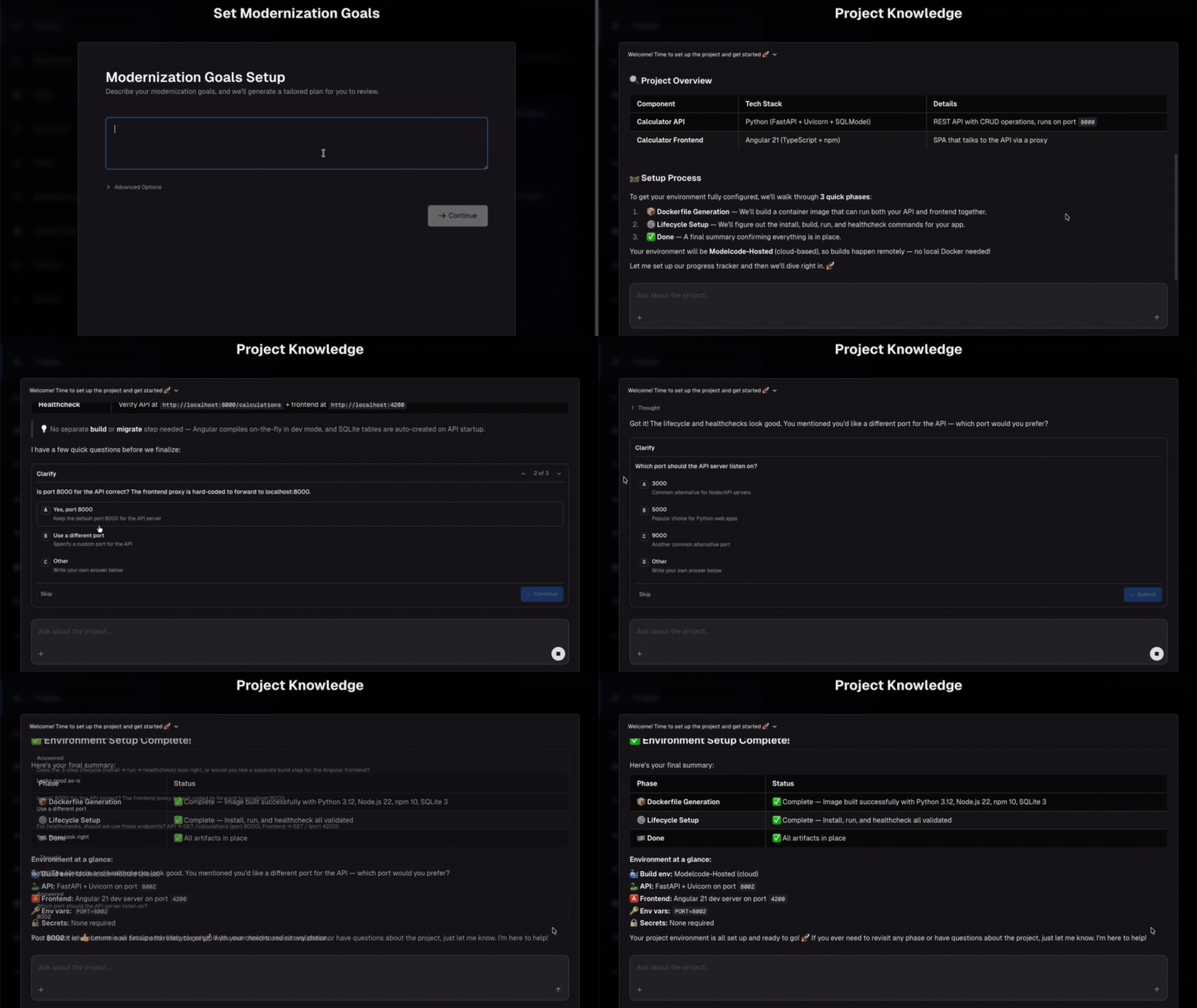
Why it matters: modernization often starts with the hardest question, how does this application actually run? These improvements guide users through setup instead of requiring perfect configuration up front.
- Repo analysis is more integrated into setup.
- Dependency detection is clearer.
- Missing metadata is surfaced earlier.
- Execution progress is streamed with better guidance.
Robust functional testing
The Morph Platform can validate parts of your application, such as APIs and services, and continue making progress even when some dependencies are missing.
Why it matters: enterprise environments are rarely perfect on the first run. Partial execution helps teams avoid all-or-nothing failures while missing dependencies are identified and resolved.
Clearer errors and chat-driven resolution
The Morph Platform now provides clearer explanations for configuration and lifecycle command errors, and for common setup issues it can suggest a fix, apply it, and retry execution through chat.
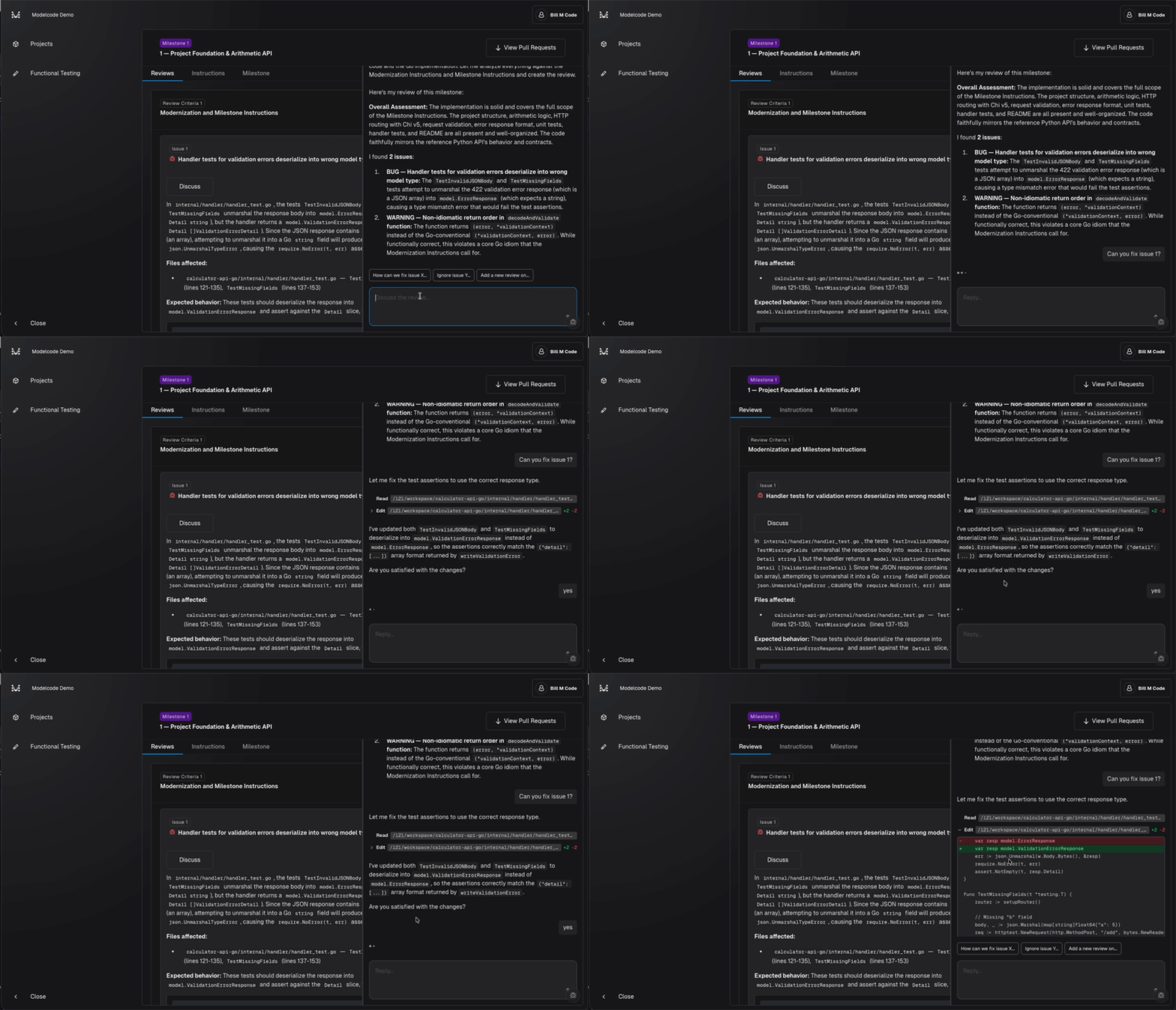
Why it matters: setup issues will still happen in large enterprise applications. The goal is to make them less manual, less mysterious, and less likely to stop a project.
- Configuration errors are easier to understand.
- Lifecycle command failures include clearer explanations.
- Common issues can be resolved with the Morph agent.
- Execution is retried automatically after a fix is applied.
Frontend modernization support
The Morph Platform now includes early support for frontend modernization workflows, including server-rendered templates, embedded frontend logic, and older UI frameworks that need to be separated from backend business logic.
This release is the first step toward broader frontend stack support. Frontend modernization support is currently limited and will continue to expand.
Azure DevOps support
The Morph Platform now supports Azure DevOps, expanding the environments where customers can connect Morph to existing source control and delivery workflows.
Why it matters: many enterprise teams use Azure DevOps as their primary development platform. This removes friction for customers who want to use Morph without changing their source control workflow.
- Added Azure DevOps repository support.
- Enabled Morph project setup for Azure DevOps-based customers.